















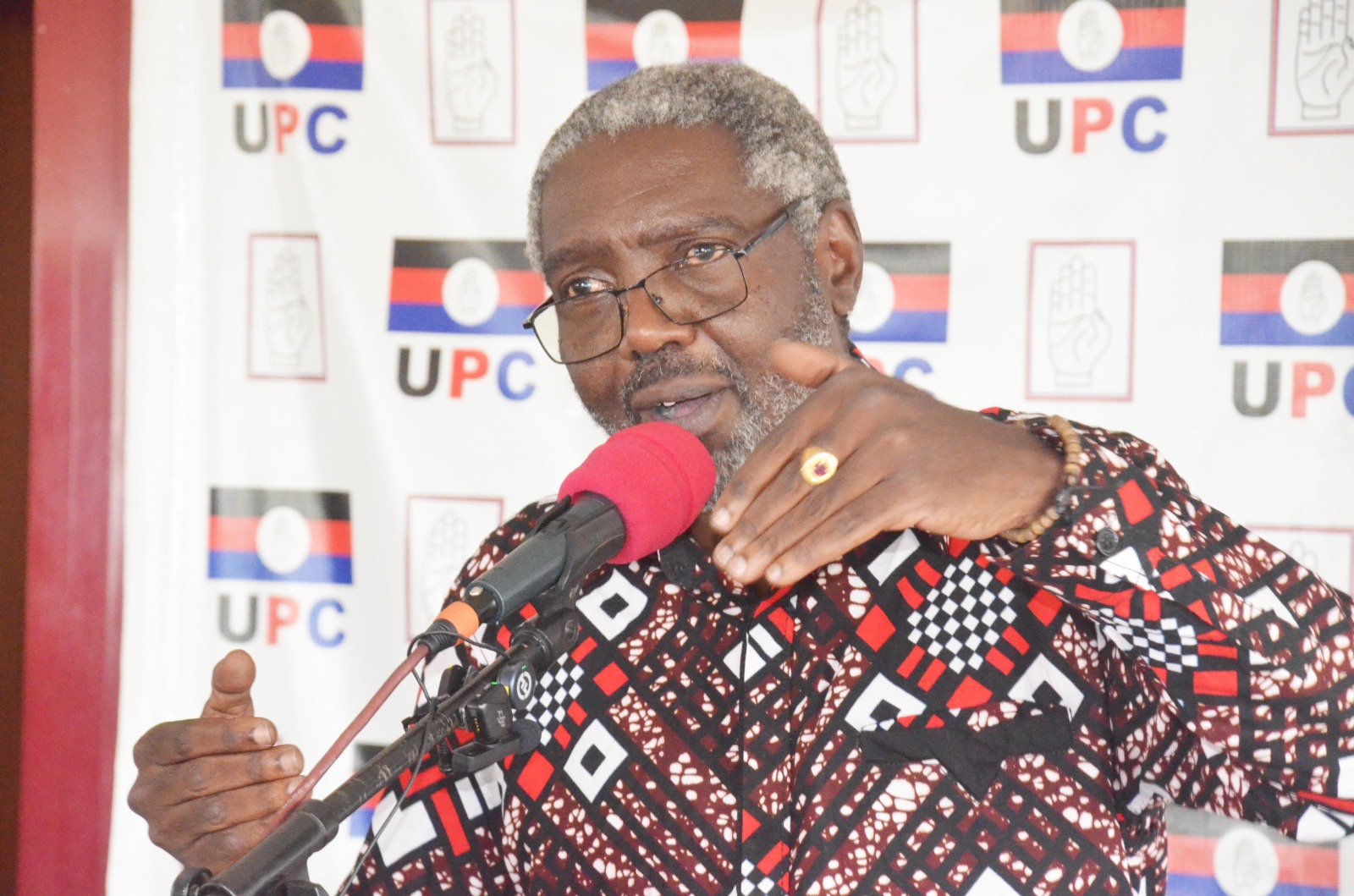
The Uganda People’s Congress (UPC) has called for major improvements in Uganda’s education and health systems, saying greater investment in human development is essential to achieving sustainable economic and social development.
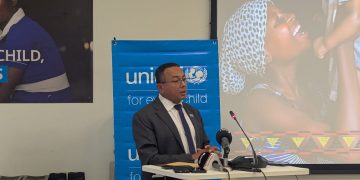
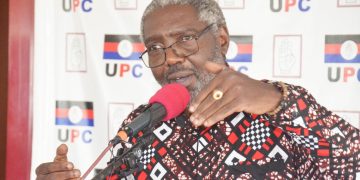
UPC President Jimmy Akena said education should go beyond preparing children to pass examinations and instead equip them with practical knowledge, skills and abilities needed to contribute meaningfully to Uganda’s development.
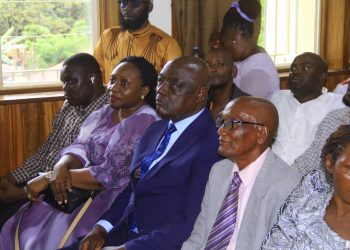
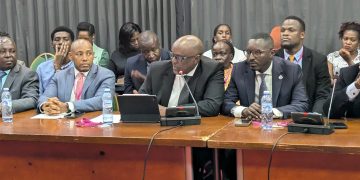
Akena made the remarks at the UPC headquarters at Uganda House in Kampala as thousands of learners prepare to sit the 2026 Primary Leaving Examination (PLE), Uganda Certificate of Education (UCE) and Uganda Advanced Certificate of Education (UACE) examinations.
“An examination should ask a much bigger question. We should be asking ourselves, what are we preparing the Ugandan child for?” Akena said.
Akena said investment in human development should begin before children enter school, particularly through maternal healthcare, proper nutrition and early childhood development.
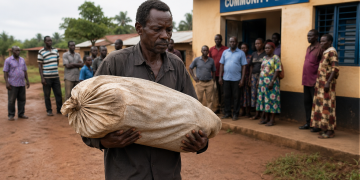
He cited the 2022 Uganda Demographic and Health Survey, which found that about 26 percent of children under five were stunted.
He said the challenge is particularly pronounced in regions such as Karamoja, Kigezi and Tooro, where he cited stunting rates of about 44 percent, 42 percent and 39 percent respectively.
Akena said addressing child malnutrition should go beyond food availability to include maternal nutrition, appropriate infant feeding, sanitation, disease prevention and household practices.
“Health, nutrition and education are therefore not separate missions. They are parts of one mission: developing the human being,” he said.
The UPC leader also questioned the capacity of Uganda’s public education system to provide quality education to all children.
He said Uganda had about 11.8 million primary school learners in 2025, with approximately 9.1 million enrolled in public schools and 2.7 million in private schools.
According to Akena, the growing number of learners outside government education programmes raises questions about why an increasing number of parents are paying for education.
He said the issue should not be about condemning private schools, but understanding why parents feel compelled to pay for education in order to secure the quality of learning they want for their children.
Akena also raised concerns about teacher shortages and poor working conditions, arguing that schools without adequate numbers of teachers cannot provide quality education.
According to figures he cited, government primary schools have an average of about 61 pupils per teacher and 79 pupils per classroom.
He called for school inspections to go beyond classroom attendance and academic performance to assess teacher accommodation, access to water and sanitation, electricity, textbooks, laboratories, workshops, libraries and other learning facilities.
Akena also called for increased investment in technical and vocational education alongside university education.
He said Uganda needs doctors, nurses and other health professionals, but also technicians, artisans, agricultural workers, engineers and other skilled workers to support economic development.
“An economy cannot operate with engineers but without technicians,” he said.
Akena proposed what he termed a P5 Minimum Foundational Capability Guarantee, aimed at ensuring that by Primary Five, every child can read with understanding, perform basic arithmetic and solve simple problems.
He stressed that the proposal should not be interpreted as encouraging children to leave school at Primary Five.
“P5 must be a guarantee, not an exit point,” he said.
Akena said Uganda also needs to develop a system that allows people to continue learning and upgrading their skills throughout their working lives.
He urged policymakers to measure the success of education and human development through outcomes such as improved learning, better health, increased productivity and higher household incomes.
“Uganda’s greatest asset is its people,” Akena said, as he wished candidates success in the 2026 national examinations.