

























Education experts, government officials, school leaders, civil society organisations, learners and media practitioners have renewed calls for stronger action to eliminate violence against children in schools, warning that abuse continues to undermine children’s right to education and healthy development.
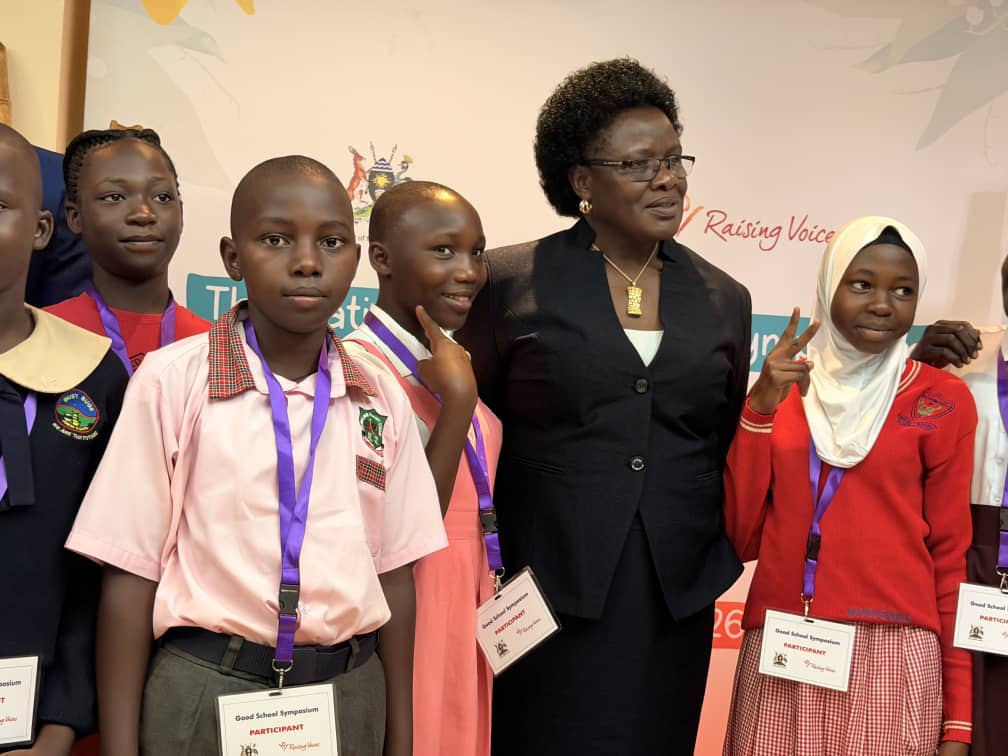
The appeal was made during the National Good School Symposium organised by Raising Voices at the Sheraton Hotel in Kampala. Held under the theme, “Sustaining Violence Prevention Efforts in Schools,” the symposium brought together key stakeholders to reflect on progress made over the years and identify strategies for strengthening child protection in learning institutions.
Speaking at the event, Makerere University researcher and educationist Eddy Joshua Walakira said violence remains deeply entrenched in many Ugandan schools despite sustained interventions by government and development partners.
Walakira cited research indicating that one in four learners in Uganda misses school because of violence. He said corporal punishment, emotional abuse and bullying remain the most widespread forms of violence, while sexual violence, though reported less frequently, disproportionately affects girls. He added that boys are also victims of sexual abuse, and that violence is often perpetrated not only by fellow learners but also by teachers and other adults within school environments.
He warned that violence has far-reaching consequences, including poor academic performance, psychological trauma, school absenteeism and increased dropout rates.
“We need to move away from the belief that beating children improves academic performance,” Walakira said. “Schools should embrace positive discipline approaches that promote dialogue, guidance and accountability instead of fear and physical punishment.”
He also urged school administrators and teachers to address the root causes of poor academic performance before resorting to disciplinary measures. According to Walakira, factors such as hunger, inadequate learning conditions, family challenges and ineffective teaching methods often contribute to poor learner outcomes and should be considered when addressing behavioural or academic concerns.
Hassan Mulusi, Technical Advisor on Violence Against Children at Raising Voices, said the symposium marked the organisation’s first national platform bringing together schools that have implemented the Good School Toolkit over the past two decades.
He said the gathering was intended to enable schools to share experiences, lessons learned and best practices in preventing violence and creating safe, inclusive learning environments.
Mulusi explained that the Good School Toolkit equips schools with practical approaches to preventing violence by strengthening child protection systems, establishing school committees, developing action plans and encouraging the active participation of teachers, learners and parents.
He noted that children continue to experience various forms of violence, including physical, emotional, sexual and economic abuse. While cases of sexual abuse involving teachers remain a concern in some primary schools, he said peer-to-peer sexual violence is more prevalent in secondary schools.
Mulusi also identified child labour, neglect, and the denial of school fees and essential scholastic materials as forms of violence that continue to disrupt children’s education and wellbeing.
He said the Good School Toolkit was developed in 2009, rigorously evaluated between 2012 and 2014, and later rolled out nationally after demonstrating significant success in reducing violence in participating schools. The toolkit remains freely accessible to schools and communities seeking to strengthen violence prevention initiatives.
Participants at the symposium called for stronger collaboration among government institutions, schools, parents, civil society organisations and the media to sustain efforts aimed at ending violence in schools and ensuring that every child can learn in a safe, supportive and nurturing environment.