






















Uganda is set to showcase its growing energy potential and attract investment during the Fourth Power and Electrical International Expo and Forum 2026, scheduled to run from July 9 to 11 at the Uganda Manufacturers Association Multi-Purpose Hall in Nakawa.
The three-day event is expected to bring together government officials, policymakers, investors, manufacturers, technology innovators, development partners and energy experts to explore opportunities for expanding Uganda’s energy sector and accelerating industrial development.
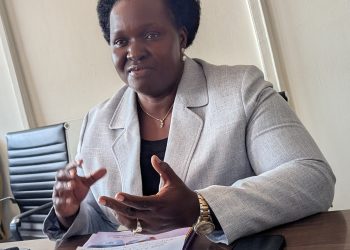
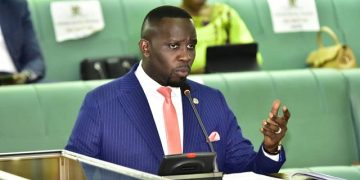
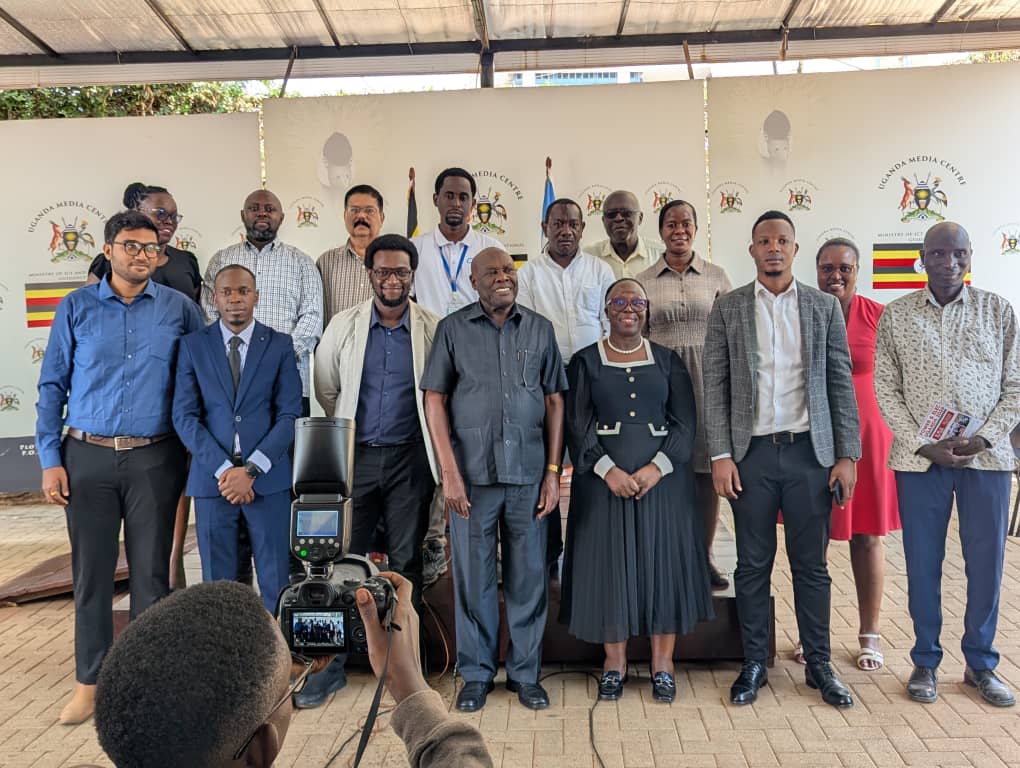
Speaking during the weekly Ministry of Energy and Mineral Development briefing at the Uganda Media Centre, the Minister of State for Energy, Sidronius Okaasai Opolot, said the expo will provide a platform for showcasing Uganda’s progress in the energy sector while promoting investment, technology transfer and innovation.
The expo is being organised by the Ministry of Energy and Mineral Development in partnership with Exhibitions and Trade Services India Private Limited, Leneta Enterprises Uganda Limited, the Uganda Manufacturers Association and other sector stakeholders under the theme, “Scaling Energy Ten Times: Technology, Sustainability and Global Inputs.”
Okaasai said the event comes at a critical time as Uganda implements Vision 2040 and the Fourth National Development Plan, both aimed at transforming the country into a tenfold economy by 2040.
He said the government’s focus has shifted beyond simply increasing electricity generation to ensuring that energy drives industrialisation, creates employment, supports innovation and improves household incomes.
“We must ask ourselves three important questions: Where is the money? Where are the industries? And where is the energy?” Okaasai said, noting that these questions continue to guide government efforts to maximise economic returns from investments in the energy and minerals sector.
According to the minister, Uganda’s installed electricity generation capacity has grown to 2,098 megawatts following the commissioning of the Karuma Hydropower Project and the Nyagak III Hydropower Plant.
He added that national electricity access has risen to 62 percent, comprising 24.05 percent connected to the national grid and 38 percent served through off-grid solutions, with more than 2.75 million electricity connections established across the country.
The government, he said, remains committed to achieving universal electricity access by 2030 through continued expansion of the national grid alongside decentralised clean energy technologies such as solar power systems.
Okaasai said the ministry is implementing policies that encourage private sector participation through independent power transmission, renewable energy investments, net metering and energy efficiency programmes.
Several large-scale electricity generation projects are also in the pipeline, including the Ayago Hydropower Project, expected to generate 840 megawatts, the Oryang Hydropower Project with a projected capacity of 392 megawatts, and the Kiba Hydropower Project, expected to add another 100 megawatts to the national grid. Government is also investing in thermal, solar, wind and nuclear energy projects.
The minister further revealed that Uganda is advancing its clean mobility agenda through the development of electric vehicle charging infrastructure and the promotion of biofuels. Preparations are also underway for the country’s planned 8,400-megawatt nuclear power programme in Buyende District, supported by specialised human resource training at Soroti University.
The expo is expected to attract exhibitors and delegates from China, India, Kenya, Tanzania, Rwanda, the United Arab Emirates, Turkey and several other countries, providing opportunities for business networking, investment promotion, technology transfer and knowledge exchange.
A specialised Power and Electrical Forum on July 10 will focus on innovation, start-up enterprises and emerging technologies under the theme “Powering the Future: Innovation Pathways to Tenfold Energy Scale.”
Okaasai reaffirmed the government’s commitment to attracting investors who will not only inject capital into the country but also establish industries, transfer technology and build local expertise to support Uganda’s industrial transformation.
“We are looking for collaborators who will invest, transfer technology, build local capacity, support innovation and create industries that add value to our products within Uganda,” he said.