



























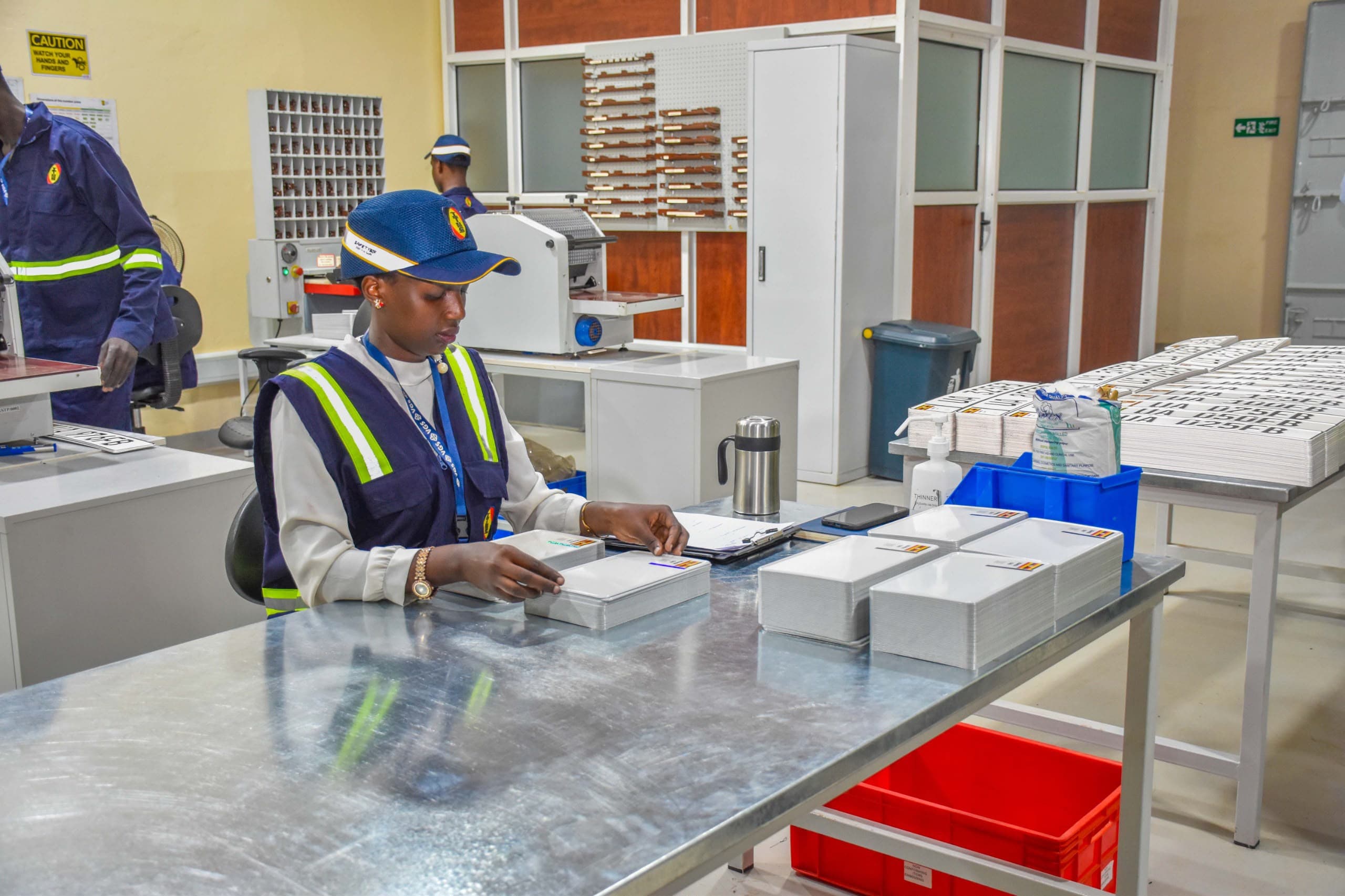
Government has intensified the rollout of Uganda’s digital number plates following the arrival of a fresh consignment of electronic components, a development expected to ease months of delays and accelerate the migration of motorists to the new registration system.
The latest shipment of components has restored production capacity for the high-security digital number plates, which are a key component of the Intelligent Transport Monitoring System (ITMS). The initiative is aimed at strengthening national security, improving vehicle traceability, enhancing road safety and modernising transport management.
The renewed rollout follows a directive by the Minister of Works and Transport, Fred Byamukama, ordering ITMS managers to restore normal service delivery and address the growing backlog of motorists awaiting number plates.
ITMS Public Relations Consultant Steven Turyarugayo said the arrival of the components marks a major breakthrough in implementing the minister’s directive.
“The arrival of these components, together with strengthened production processes and improved logistics, is enabling us to accelerate production and restore normal service delivery. Our teams are working around the clock to clear the backlog, and we expect to fully stabilise both first-time registration and post-registration migration services by August 30,” Turyarugayo said.

He noted that the digital number plate project remains central to Uganda’s smart transport agenda, helping authorities improve law enforcement and vehicle tracking while supporting broader national security objectives.
Officials, however, explained that delays affecting motorists seeking to replace old registration plates stem from a financing challenge rather than production capacity alone.
According to project documents, the replacement programme was initially designed to serve motorists whose number plates had been lost, stolen, damaged, defaced or had developed technical faults. Under the arrangement, the contractor produces approximately 100 replacement plates daily while prioritising these categories of applicants.
Motorists replacing old number plates pay UGX 150,000, with the remaining production costs originally expected to be covered through revenue generated under the Express Penalty Scheme (EPS). However, the suspension of the EPS cut off that funding stream, limiting the contractor’s ability to scale up production for motorists voluntarily seeking to migrate from the old registration system.
Government and the contractor are now exploring an alternative financing mechanism to support large-scale migration to digital number plates.
Turyarugayo said this explains the delays experienced by many motorists who voluntarily applied for the new plates.
“The people making the loudest complaints are those who voluntarily applied to migrate from the old number plates to the new digital system. Some applied months ago and are still waiting, but there is a reason for that,” he said.
Production Manager Austine Egesa said the manufacturing facility is now operating at full capacity following the minister’s intervention.
“Following the Minister’s intervention, production of new number plates has significantly accelerated. The factory is operating at full capacity, the backlog is steadily decreasing, component supplies have stabilised and customers are already receiving their number plates,” Egesa said.
ITMS officials attributed the earlier delays to geopolitical instability in the Middle East, which disrupted international shipping routes and delayed deliveries of the electronic components needed for production.
To prevent future disruptions, the system’s managers have diversified their logistics network by rerouting shipments through Oman and Qatar, reducing reliance on routes affected by regional instability.
Data from the Motor Vehicle Registration Department shows that more than 47,000 motorists have applied to migrate from old registration plates to the digital system. Of these, about 1,384 applicants who completed payment are still awaiting production and issuance of their plates.
Officials say the backlog has already reduced by nearly 40 per cent since government ordered measures to restore normal operations.
Despite the challenges affecting voluntary migration, production for newly registered vehicles has remained largely uninterrupted. The ITMS facility currently produces about 2,500 number plates daily, translating into nearly 50,000 plates each month, a capacity officials say is sufficient to meet demand from first-time vehicle registrations.
Motorists whose applications have already been processed are expected to continue receiving notifications for collection as production increases, while the proposed financing arrangement is expected to support wider migration to digital number plates and eventually eliminate the remaining backlog.