














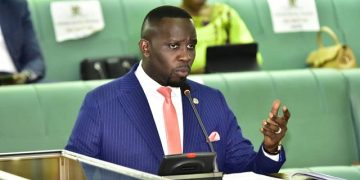








- Education Minister Dr John Chrysostom Muyingo
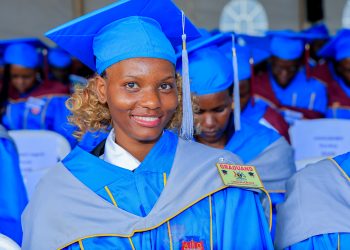
The Ministry of Education and Sports has awarded loans 2,790 students to pursue higher education for the 2026/2027 academic year, amid a sharp increase in demand for financial support.
The beneficiaries are part of the 13th cohort under the Higher Education Students Financing Scheme (HESFS), with 8,005 applicants found eligible out of 10,615 applications received.
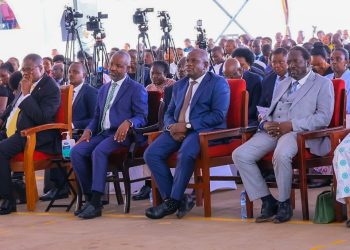
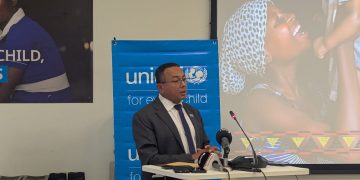
Acting Minister of Education and Sports and State Minister for Higher Education, Dr John Chrysostom Muyingo, officially released the list of beneficiaries on Thursday, saying the government remains committed to ensuring that financial challenges do not prevent brilliant Ugandans from accessing higher education.
Muyingo said the number of beneficiaries has increased from 2,048 last academic year to 2,790 this year, representing a 36.2 percent increase.
However, he acknowledged that demand for the loans remains far greater than the available resources, with only 34.8 percent of eligible applicants securing funding.
“Out of 8,000 needy applicants, we have been able to secure resources for 2,790. The need is still very huge, but government is committed to mobilising more resources to increase the number,” Muyingo said.
The number of applications also rose significantly from 7,125 in the 2025/2026 academic year to 10,615 this year, representing a 48.9 percent increase.
The Commissioner for the Higher Education Students Financing Scheme, Michael Wanyama, said the increase reflects growing public awareness and confidence in the student loan programme.
Of the successful beneficiaries, 1,400 are female, representing 50.2 percent, while 1,390 are male, representing 49.8 percent.
The number of female beneficiaries has increased substantially from about 861 in the previous academic year.
The scheme has also awarded loans to 64 students with disabilities, compared to 45 last year. Students with disabilities are eligible to pursue any accredited undergraduate degree or diploma programme, including humanities, unlike other applicants who are largely restricted to programmes approved under the scheme.
The beneficiaries include 2,019 students pursuing degree programmes and 771 pursuing diploma programmes.
The largest number of beneficiaries will pursue Bachelor of Science with Education, with 581 students, followed by engineering with 498, computer science with 313, and healthcare-related programmes with 281 students.
Wanyama said the selection process was based on financial need, academic performance, vulnerability, geographical equity and inclusion.
The scheme also introduced a three-tier selection model in which 30 percent of applicants were selected under the district quota system, 30 percent based on the proportion of eligible applicants from districts and cities, while 40 percent were selected according to socio-economic vulnerability.
The officials said the selection resulted in beneficiaries from every district in Uganda, including areas that have historically recorded low participation in the scheme.
The Ministry said the increased number of beneficiaries was made possible by a lower average cost per student compared to initial projections.
Wanyama said the budget request had been Shs13.5 billion to support 3,000 students, but the scheme received an additional Shs10 billion, which had initially been expected to support about 2,400 students.
However, because of the lower unit cost of funding, the scheme was able to support 2,790 students.
The loans cover tuition, functional fees, research fees and aids and appliances for students with disabilities. The money is paid directly to the respective institutions rather than to students.
The scheme currently supports students in public universities, chartered private universities and other eligible tertiary institutions offering diploma programmes.
The number of participating universities has increased to 33, comprising 11 public universities and 22 private chartered universities.
Muyingo encouraged private universities that have not yet attained chartered status to work towards obtaining it if they want their students to benefit from the scheme.