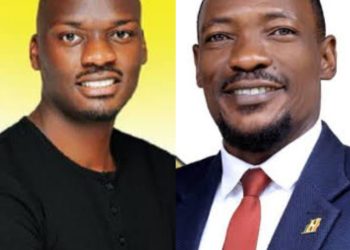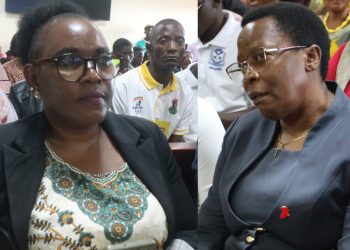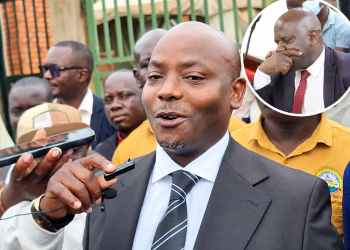


















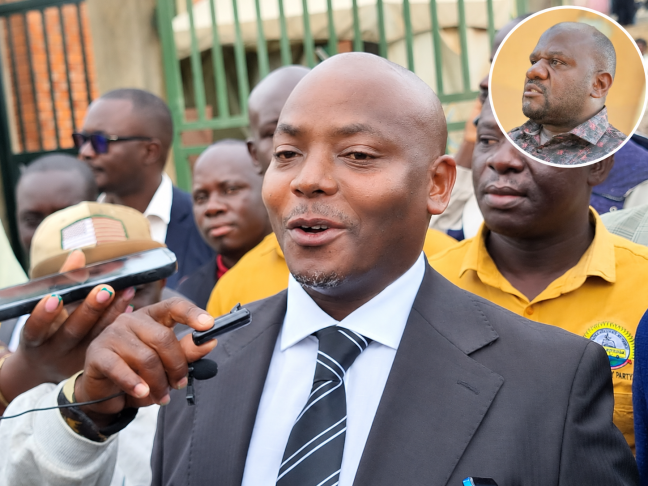
Justice Godfrey Himbaza, the judge presiding over the election petition in which Ronald Kibuule is challenging the victory of Abdallah Kiwanuka, popularly known as Mulimamayuuni, lost his temper after lawyer Asuman Basalirwa accused him of surrendering his powers to Francis Kandiho, the petitioner’s lead lawyer.
Basalirwa argued that Kandiho had repeatedly provoked the respondents, but the judge appeared not to take notice of the conduct and allowed the alleged insults to pass without intervention.
The confrontation followed a series of objections raised by Kandiho, which he successfully argued, apparently frustrating Basalirwa, who began addressing the court in a raised voice. Kandiho responded by telling him to stop shouting.
Justice Himbaza, who is often seen smiling during court proceedings, lost his temper and ordered Basalirwa to immediately withdraw his statement and apologise. Basalirwa recognised the judge’s displeasure, withdrew the remark and promptly apologised.
Before the incident, Kandiho had raised concerns about Basalirwa’s conduct outside court, accusing him of discussing ongoing proceedings with the media in a manner that could amount to sub judice.
Kandiho argued that the integrity of the court had been undermined by Basalirwa, whom he accused of making reckless public statements about matters still before the court.
He cited comments circulating on TikTok and other online platforms in which Basalirwa allegedly claimed that Kibuule’s lawyers had failed to secure witnesses, despite the petitioner having indicated that he intended to present 75 witnesses.
He argued that the public comments were intended to ridicule the proceedings and undermine the court’s integrity.
He further accused Basalirwa of questioning the credibility of the proceedings on Tuesday by suggesting that Kibuule had assembled witnesses who presented uniform evidence.
Kandiho added that, given Basalirwa’s seniority in the legal profession, he would have expected him to be among the last lawyers to undermine the integrity of the court.
“He wants a point of recovery from this case since he is one of the recently failed politicians in elections,” Kandiho said.
In response, Basalirwa used a Luganda expression, “Ebitalina makulu sibiwa makulu,” which loosely translates to “meaningless issues should not be given importance.”
Justice Himbaza warned Basalirwa against commenting on the ongoing proceedings in the media, while clarifying that he was not barring him from speaking to journalists altogether.
“I am not preventing you from commenting in the media, but please not on the proceedings. You should have boundaries,” the judge said.
Meanwhile, the court adjourned the case to November 4, when it is expected to begin examining video evidence submitted by Kibuule before proceeding with his cross-examination.
Kiwanuka’s lead lawyer, Chrysostom Katumba, had asked the court to allow the respondents to cross-examine Kibuule to determine whether it would still be necessary to examine the remaining 16 witnesses presented by the petitioner.
However, Kandiho objected, arguing that the court had not yet admitted some of the attachments submitted in support of his client’s evidence.
“The petitioner is the main litigant and prime witness in this case. He should give his evidence first, and the rest give evidence to support his case. The nature of evidence he gives will help us determine who among the witnesses we should call for cross-examination. We might even take an option to abandon the rest of witnesses,” Katumba said.
Justice Himbaza ruled that it would be premature to cross-examine the petitioner before the outstanding attachments had been admitted into evidence.
Basalirwa told the court that although the affidavit had been presented, some of its attachments had not been formally admitted. He proposed that Kibuule’s lawyers tender the documents individually for examination.
The court subsequently asked Kibuule to take the witness stand and confirm the documents and attachments presented by his legal team, which he proceeded to do.
The documents included a copy of the declaration form. Kibuule, however, withdrew a copy of the tally sheet used to declare the winner before all results from the constituency had been tallied.
A voter location slip and a mobile money transaction record relating to Saddick Wabbi were also presented. Wabbi is alleged to have received a bribe of Shs100,000 from Kiwanuka to vote for him.
Basalirwa objected to the admission of the documents, arguing that Kibuule could not tender a voter location slip belonging to another person. He also questioned Wabbi’s competence to tender an Airtel statement that had not been officially addressed to him.
Kandiho referred the court to paragraph seven of Wabbi’s affidavit, in which the witness indicated that he had shared the mobile money statement and voter location slip with Kibuule.
Justice Himbaza ruled that Wabbi should be recalled to confirm the attachments before they could be admitted, since he had already been cross-examined.
The admission of the video evidence and accompanying transcripts was also deferred until the court had reviewed them.
Copies of declaration of results forms were, however, submitted and admitted into the court record.