

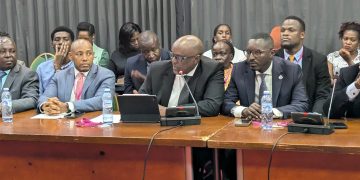
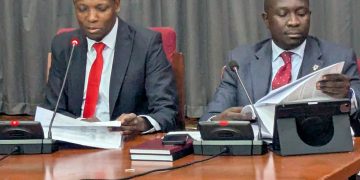










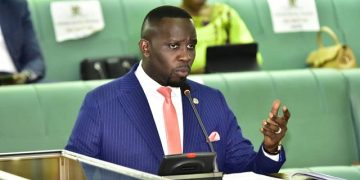








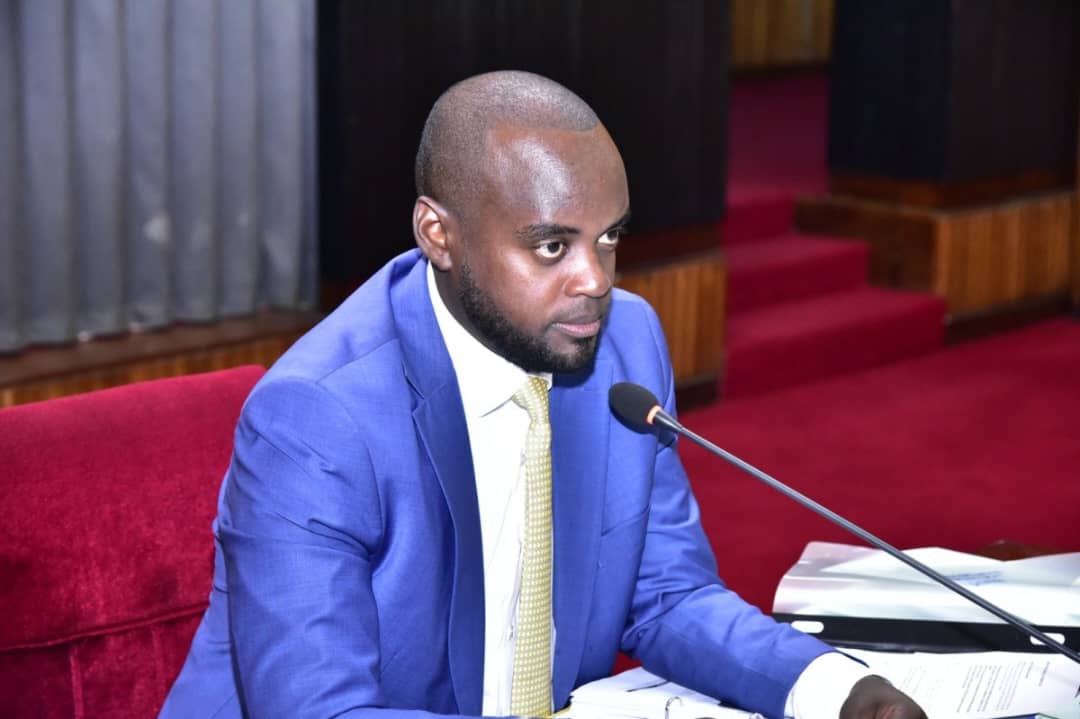
Parliament’s Committee on Physical Infrastructure has demanded answers from the leadership of the Kampala Capital City Authority (KCCA) over the city’s persistent flooding, raising concerns about illegal developments, poor drainage management and weak enforcement of environmental regulations.
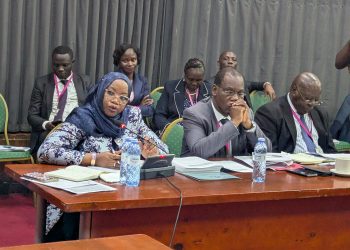
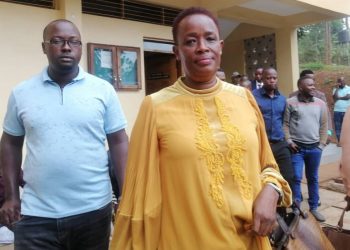
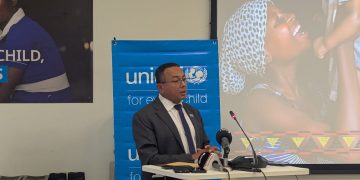
The committee met officials led by the Minister for Kampala Capital City and Metropolitan Affairs, Minsa Kabanda, and KCCA Executive Director Hajat Sharifah Buzeki to explain the continued flooding that has repeatedly destroyed property, disrupted businesses and damaged public infrastructure across Kampala.
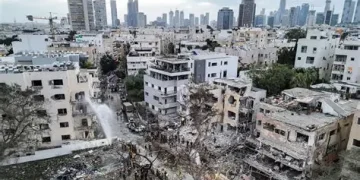
Speaking after the meeting, the committee chairperson said the inquiry focused on some of the city’s most flood-prone areas, including Nakivubo, Lugogo and Kinawataka, where flooding has become a recurring problem despite repeated government interventions.
The chairperson noted that Uganda loses an estimated US$15 million annually due to flood-related damage, emphasizing the urgency of addressing the problem before the anticipated heavy rains expected in August.
During the meeting, legislators were informed that the Nakivubo drainage channel no longer has sufficient capacity to carry the increasing volume of storm water flowing through the city. Members of the committee also raised concerns that political interference may have influenced the approval and implementation of some projects without proper technical guidance from KCCA.
Lawmakers questioned developments constructed over major drainage channels, particularly in Lugogo, where an investor is accused of building on top of a key drainage corridor, reducing its effectiveness and increasing the risk of flooding.
To establish the facts, Parliament directed the Building Review Board to conduct an independent technical assessment while reviewing reports submitted by the Ministry of Works and KCCA before making recommendations.
The committee also criticized the government’s continued expenditure on flood-related compensation, arguing that public funds should not be used to address problems created by private developments.
Members questioned why taxpayers continue to finance the maintenance of drainage channels running beneath privately owned developments, saying investors benefiting from such projects should also bear responsibility for maintaining the affected infrastructure.
The committee warned that if investigations establish that KCCA approved developments that have worsened flooding, officials responsible should be held personally accountable.
Legislators further cautioned that if Parliament is again asked to approve funds to compensate flood victims because of developments that contributed to the flooding, those found responsible should either resign or face prosecution for negligence.
Committee members also criticized KCCA’s leadership for failing to provide satisfactory explanations during the meeting, accusing both the political and technical leadership of shifting responsibility instead of taking ownership of the city’s flooding challenges.
The legislators noted that KCCA had acknowledged the existence of more than 135 illegal structures across Kampala but questioned why the authority had failed to enforce the law against the developers.
They further challenged the government’s practice of compensating people occupying wetlands despite existing laws prohibiting construction in such environmentally protected areas.
Concerns were also raised over reports that officials from the National Environment Management Authority (NEMA) were allegedly denied access to inspect one of the disputed construction sites, raising questions about whether the project proceeded without the required environmental approvals.
The committee has directed KCCA to return before Parliament with all documents relating to the approval of the contested developments. Lawmakers warned that stronger action, including recommendations for the resignation of responsible officials, could be taken if accountability is not established.