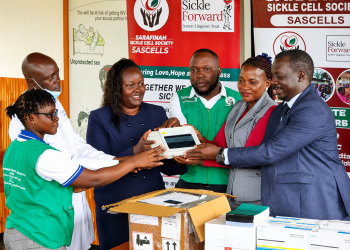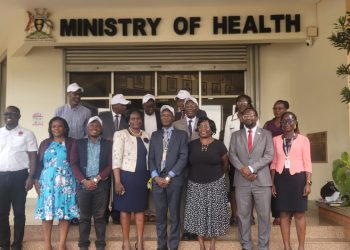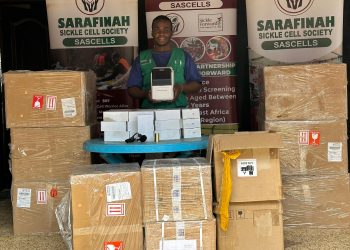



















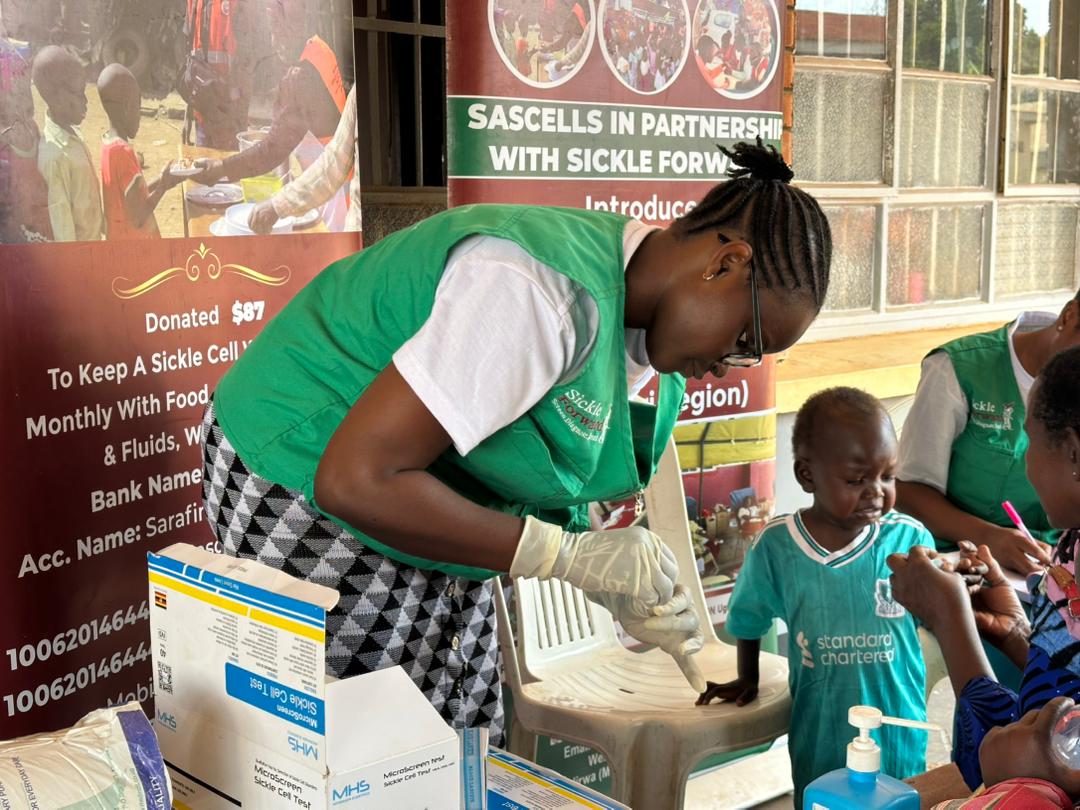
A new consignment of 10,000 sickle cell screening kits donated to Uganda is doing more than expanding access to testing, it is revealing the scale of an often-overlooked public health challenge that continues to affect thousands of children, particularly in underserved communities.
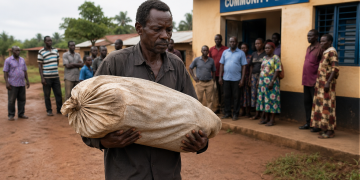
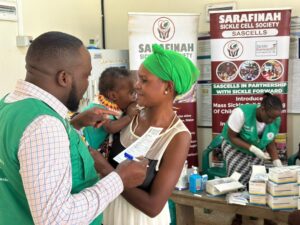
The screening kits, valued at approximately US$20,000 (about Shs72 million), were donated by international partner Sickle Forward to the Sarafinah Sickle Cell Society (SASCELLS) to support free community screening in Mukono, Buikwe, Buvuma, Ntoroko, Hoima and the Rwenzori region.
While the donation has been welcomed as a major boost to community health services, preliminary screening results from Mukono District have underscored why experts say Uganda still requires sustained international investment to tackle one of the country’s leading inherited blood disorders.
Early Screening Reveals Alarming Findings
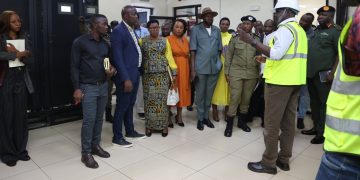
Mukono District became the first beneficiary of the new testing campaign, with screening kits distributed to Katoogo Health Centre IV, Kasawo Health Centre III and Nakifuma Health Centre III.
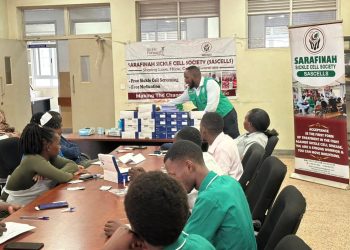
According to SASCELLS field officer Joel Mugwanya, 400 Microhaem sickle cell testing kits were delivered to Katoogo HC IV, 200 to Nakifuma HC III and another 600 to Kasawo HC III to support routine screening and community outreach.
Beyond supplying the kits, SASCELLS laboratory teams conducted on-site testing for children attending Young Child Clinic services.
The initial results paint a worrying picture.
At Katoogo Health Centre IV, 63 children were screened. Of these, 17 were diagnosed with sickle cell disease, while 12 were identified as carriers of the sickle cell trait.
At Nakifuma Health Centre III, 72 children underwent screening. The exercise found 13 children living with sickle cell disease, 31 carrying the sickle cell trait, and only 28 with normal haemoglobin.
Although these figures come from targeted community screenings and should not be interpreted as district-wide prevalence rates, health experts say they demonstrate how many children remain undiagnosed until outreach services become available.
For many rural families, such screening opportunities are often the first chance to learn their children’s sickle cell status.
Why Early Diagnosis Matters
Sickle cell disease is an inherited blood disorder that causes red blood cells to become sickle-shaped, reducing their ability to transport oxygen and increasing the risk of severe pain, infections, stroke, organ damage and premature death.
Medical experts emphasize that early diagnosis, particularly during infancy, allows children to receive preventive treatment, routine monitoring, vaccinations and family counselling that can dramatically improve survival and quality of life.
Without early detection, many children are repeatedly treated for malaria, severe anaemia or recurrent infections without the underlying condition being recognised.
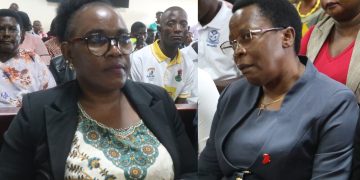
SASCELLS Chief Executive Officer and Founder, Dr. Sarafinah Bukirwa, said the donation represents far more than medical supplies.
“This donation represents hope, early diagnosis, healthier futures and our shared commitment to ensuring that no child or family is left behind in the fight against sickle cell disease,” she said.
She noted that every screening provides an opportunity for timely intervention, health education, genetic counselling and life-saving care.
Uganda’s Continuing Burden
Uganda remains among the countries with one of the highest sickle cell burdens globally.
According to health data, thousands of babies are born with sickle cell disease every year, while a much larger proportion of the population carries the sickle cell trait without knowing it.
Despite progress in newborn screening and public awareness campaigns, access to routine testing remains uneven, particularly in rural districts where laboratory infrastructure, diagnostic equipment and specialised health workers are limited.
As a result, many children are diagnosed only after developing life-threatening complications.
Organisations such as SASCELLS have increasingly stepped in to bridge these gaps by taking screening services directly to health centres and communities that lack adequate diagnostic capacity.
International Partnerships Filling Critical Gaps
The latest donation by Sickle Forward demonstrates the growing importance of international partnerships in strengthening Uganda’s response to sickle cell disease.
Beyond providing screening kits, such collaborations help expand community outreach, support health worker training, increase public awareness and improve referral systems for affected children.
However, health advocates argue that donations alone cannot solve Uganda’s growing demand for sickle cell services.
Greater investment is needed in laboratory infrastructure, newborn screening programmes, genetic counselling, comprehensive treatment centres and affordable medicines.
They also say sustainable financing from both government and international development partners will be essential to ensure screening becomes a routine service rather than depending on periodic donor-funded campaigns.
As SASCELLS begins distributing the remaining thousands of test kits across six districts, health advocates hope the initiative will not only transform individual lives but also draw greater national and international attention to a disease that continues to receive far less funding than its burden demands.
ENDS.