


























KAMPALA — Uganda has moved closer to establishing its own currency printing facility following the signing of a Memorandum of Understanding (MoU) between the Uganda Security Printing Company (USPC) and German-based currency printing and security technology firm K&B Banknote Solutions.
The agreement sets the stage for feasibility studies, technical assessments and commercial negotiations aimed at establishing a modern currency printing plant in Uganda capable of serving both domestic and regional markets.
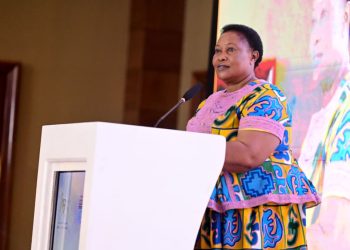
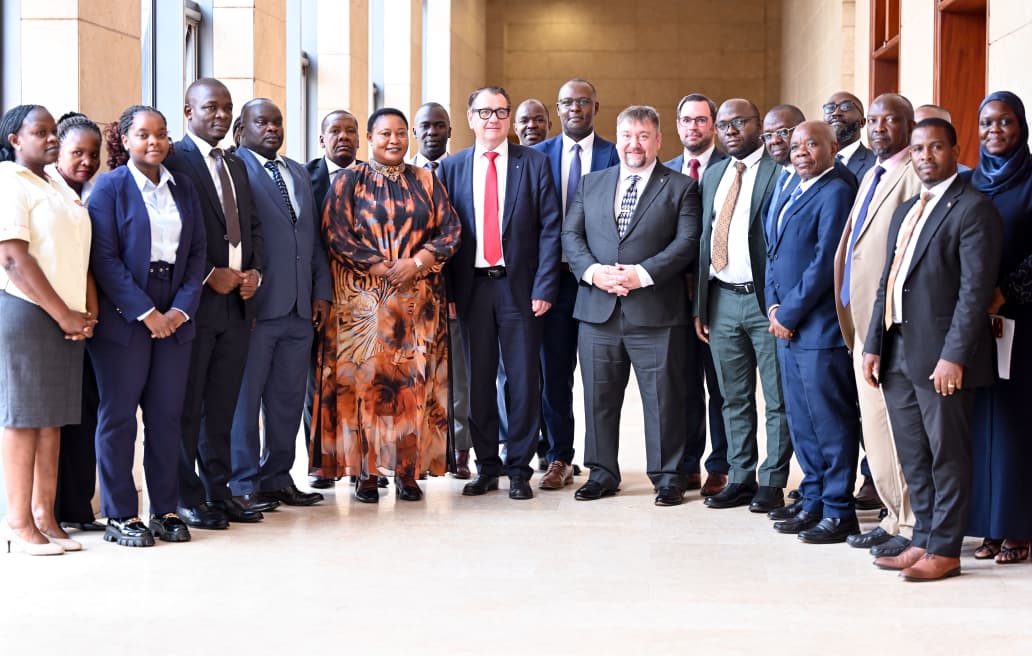
The MoU was signed at the Office of the President in Kampala in the presence of the Minister for the Presidency and Budiope West MP, Milly Babirye Babalanda, senior government officials, board chairpersons and managing directors of USPC and Uganda Printing and Publishing Corporation (UPPC), as well as representatives of K&B Banknote Solutions.
Babalanda described the agreement as an important step towards strengthening Uganda’s national sovereignty, industrial capacity and technological independence.
“I warmly welcome our partners from K&B Banknote Solutions to Uganda. We are pleased to start our journey of collaboration towards the establishment of a currency printing facility in Uganda,” Babalanda said.
She explained that the MoU provides a framework for the technical, security, feasibility and commercial assessments required before the country can establish and operate the facility.
“As we begin on this journey, the question before us is simple: Can Uganda establish and operate a modern currency facility that can meet national and regional currency demands? If the answer is yes, then what does it require us to do and how long does it take to have the facility up and running?” she asked the technical teams.
Babalanda said the project is anchored in President Yoweri Museveni’s long-standing emphasis on national sovereignty, value addition and skills development.
She said Uganda should develop the capacity to manufacture critical state documents and security products locally rather than relying heavily on foreign suppliers.
According to the minister, the initiative is also intended to create opportunities for Ugandan engineers, technicians and other professionals to acquire specialised skills in advanced security-printing technologies.
“We are not simply installing machines. We are building a national capability,” Babalanda said.
She called for skills transfer to be made a central component of the partnership, directing that Ugandan engineers and technicians should participate in the project from the planning and installation stages through testing, commissioning and eventual operation of the facility.
Babalanda said she was encouraged by K&B’s technical training programmes and expressed hope that Ugandan youth would benefit from similar opportunities.
“I look forward to seeing that moment when Ugandans will be tapping into this opportunity,” she said.
The minister said the proposed currency printing facility is consistent with Uganda’s broader industrialisation and technological development plans.
She linked the project to the National Resistance Movement’s 2026-2031 manifesto, particularly its emphasis on industrialisation, production and economic transformation.
She also cited the Fourth National Development Plan, which prioritises sustainable industrialisation, employment, wealth creation, science, technology and innovation, as well as Uganda Vision 2040, which seeks to transform the country into a modern and prosperous economy.
“For this reason, I consider this project an important part of Uganda’s wider industrialisation and technological development agenda,” Babalanda said.
Babalanda called for strict oversight of the project and directed the establishment of a multi-sectoral technical committee to coordinate its implementation.
The committee, she said, should bring together USPC, the Bank of Uganda, the Ministry of Finance, Planning and Economic Development, the Attorney General’s Chambers and relevant security agencies.
She also called for a formal monitoring mechanism to track progress against agreed milestones.
“We must also establish a formal monitoring arrangement to ensure that progress is regularly measured against the agreed roadmap milestones,” she said.
Babalanda warned government officials against delays, noting that President Museveni has expressed frustration over projects that fail to commence or take excessively long to complete.
“For this matter, as your political supervisor, I want to assure you that I will not tolerate any actions that are likely to drag the implementation of this project,” she said.
She further stressed the need for transparent procurement, realistic timelines and accountability throughout the project cycle.
“This is a strategic national facility that will be involved in currency manufacture. Therefore, procurement must be clean, timelines must be realistic and respected, and accountability must be maintained throughout the project cycle,” Babalanda said.
Call For Financing And Technical Support
Babalanda urged K&B Banknote Solutions to share its technical expertise with USPC and support the Ugandan company in identifying affordable financing options to accelerate implementation.
She said the German firm’s international reputation in currency-printing technology gave government confidence in the partnership, while cautioning both sides to maintain high standards of integrity.
She also urged USPC to remain focused on the objectives of the joint venture and ensure that the project is implemented in Uganda’s national interest.
Babalanda directed the technical team to prepare a detailed implementation roadmap.
“The moment I receive it, I will secure an appointment with H.E. the President so that we can appraise him about the status of this project,” she said.
Representing the Permanent Secretary in the Office of the President, Hajji Sadat Kisuyi welcomed the K&B delegation and pledged government support and oversight throughout the implementation process.
The signing of the MoU marks the beginning of a process that is expected to include feasibility studies, technical evaluations and commercial negotiations before the proposed facility is established.
If completed, the project would give Uganda domestic capacity to produce currency and potentially provide security-printing services to other countries in the region, reducing reliance on overseas suppliers and creating opportunities for technology transfer and specialised employment.