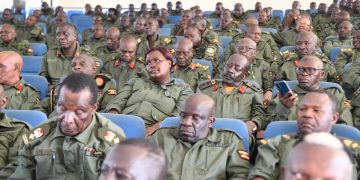






Every morning, millions of pupils across the country stand in school assemblies and sing “Oh Uganda, Land of Beauty.” The anthem echoes through military parades, sports grounds, government ceremonies, and public functions.
The song is also sung with pride when national teams take to the field or when an athlete mounts the medal podium.
For 64 years since independence, the melody composed by George Wilberforce Kakoma has become one of the country’s most recognisable rituals and one of the shortest national anthems in the world.
Yet behind that familiar melody lies a less familiar truth. Many Ugandans quietly fall silent after the opening lines. Others hum through the second stanza, mumble words they cannot fully remember or simply stop altogether. The anthem is instantly recognisable, but for a surprising number of citizens, it remains an unfinished song.
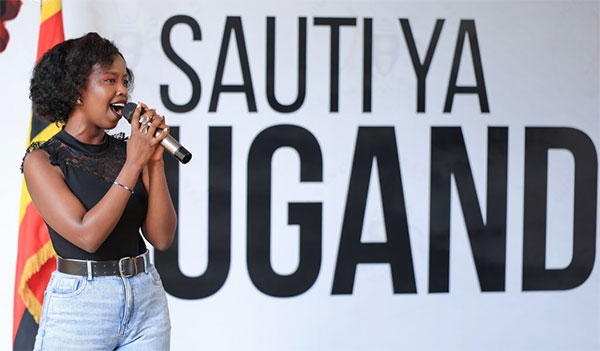
That paradox has now become the focus of a national campaign. This week, the Uganda Media Centre and the Ministry of ICT and National Guidance launched Sauti Ya Uganda, a nationwide competition offering a grand prize of 100 million shillings for the best performance of Uganda’s National Anthem and the East African Community Anthem. Far from being another music contest, organisers say the initiative is intended to rekindle patriotism by encouraging Ugandans to learn, understand and creatively interpret the full anthems.
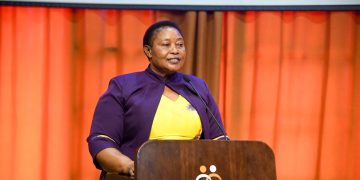
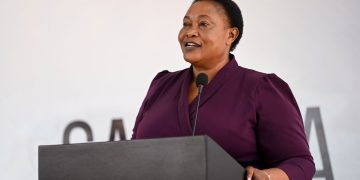
Launching the competition, ICT and National Guidance Minister Justine Kasule Lumumba described it as an effort to strengthen national unity and deepen appreciation of Uganda’s identity through music. Solo artists, choirs, bands and community groups are all invited to participate.
The campaign arrives against the backdrop of research that suggests Uganda’s relationship with its own anthem is weaker than many assume.
A study by Makerere University’s College of Education and External Studies found that only 42 percent of Ugandans sampled could sing the National Anthem, leaving 58 percent unable to do so.
Conducted under a project on integrating patriotism into the training of early childhood teachers, the study involved principals, tutors and student teachers from Primary Teachers’ Colleges across different regions of the country.
Perhaps even more revealing was another finding. While fewer than half of the respondents could sing Uganda’s National Anthem, about 90 percent confidently sang the cultural anthems of their respective communities, including Buganda Kingdom’s “Ekitibwa Kya Buganda.”
The findings suggest that while cultural identity remains deeply rooted, the symbols intended to unite Ugandans across regions have not enjoyed the same connection.
That reality has surfaced repeatedly beyond academic research. For years, street interviews, radio talk shows and social media conversations have revealed the same quiet confession. Many Ugandans know the first stanza by heart but struggle with the second and third.
“We sing it every day in school, but by the time we reach the second stanza, most of us are lost,” one Kampala resident admitted during a public interview several years ago. Others have spoken of the embarrassment of standing through the anthem at public functions while those around them continue singing.
Education specialists say the problem extends beyond memory. Although children sing the anthem almost every school day, few are taught its history, symbolism or meaning. Once formal schooling ends, opportunities to revisit the anthem become increasingly rare. The result is a song repeated out of routine rather than understood as an expression of citizenship.
Language has also shaped the conversation. The anthem was written in English, yet Uganda is home to more than 50 indigenous languages. Although official translations exist in Luganda, Swahili and many other local languages, they are rarely heard outside special occasions, limiting the anthem’s emotional reach for many citizens.
A Song Born, and Quickly Amended, at Independence
Ironically, the anthem itself was born from a public competition. The anthem’s history traces back to the eve of Uganda’s independence. In 1962, a subcommittee invited public entries for a new national song. When none fully satisfied the panel, George Wilberforce Kakoma (assisted by Peter G. Wingard on aspects of arrangement) composed the music and lyrics. His entry was selected and first performed publicly during independence celebrations on October 9, 1962.
Just weeks after independence, the original first line “Oh Uganda, thy people praise thee” was amended following a protest from the Church of Uganda, led by Archbishop Erica Sabiti. The Archbishop argued the anthem was “Godless.” Prime Minister Milton Obote engaged with the request, and after consultations, the line was changed to the current “Oh Uganda! May God uphold thee.”
Kakoma’s legacy, however, came with controversy. In 2008, he sued the government, claiming he had received only a token Shs2,000 as thanks and was never adequately compensated. He argued for ongoing royalty rights. The case dragged on; after Kakoma’s death, the Court of Appeal eventually ruled that copyright in the anthem vested in the government, as the work was created under a public competition for national use. The episode underscored tensions between individual creative contribution and state ownership of national symbols.
Over the years, there have been notable discussions and proposals to either revise the existing national anthem or develop an entirely new one. These efforts were driven by a mix of concerns: making the song more accessible and memorable to ordinary citizens, modernising its language and tone, boosting its appeal for tourism, and addressing perceptions that the opening word “Oh” sounded more like a lament than a celebration of national pride and progress.
One prominent push came around 2014 when then-Tourism Minister Maria Mutagamba indicated that government was considering changes to the anthem as part of efforts to enhance Uganda’s image and attract visitors. Some officials and cultural commentators argued that updating the lyrics could make the anthem more vibrant and emotionally resonant.
Then Prime Minister Amama Mbabazi later clarified that there were no plans to change the anthem outright, stating firmly that “The National Anthem will not be changed.” Instead, the focus shifted toward creative interpretations, dramatisation, and better civic education around the existing piece.
The proposals never materialised. Instead, attention shifted towards finding new ways of helping citizens understand and embrace the existing anthem. Others argued for greater use of translations into indigenous languages so that more Ugandans could connect with its message.
Sauti Ya Uganda represents the latest ambitious attempt. The competition will culminate during this year’s Independence Day celebrations on October 9. It also includes four weeks of TikTok challenges, with weekly winners receiving a cash prize, in an effort to draw younger Ugandans into the campaign.
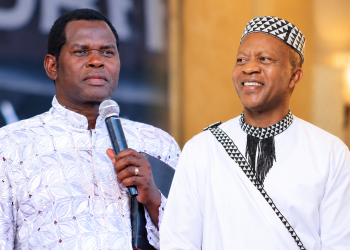
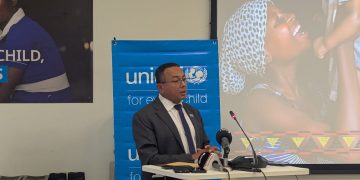
For Uganda Media Centre Executive Director Alan Kasujja, the initiative is about far more than musical talent.
“Sauti Ya Uganda isn’t asking you to memorise words,” he said at the launch. “It is asking you to bring the anthem back to life in your own voice, your own language and your own style. This is an invitation for every Ugandan to interpret our National Anthem and the East African Anthem creatively.”
Dr Benon Kigozi of the African Music Council believes the initiative addresses a deeper national question.
“The competition on the Uganda National Anthem and the East African Anthem is important in promoting patriotism and a sense of belonging,” he said. “When citizens understand and sing the same anthem, they share the same national identity.”
Whether a music competition succeeds where decades of routine have fallen short remains to be seen. What is already certain is that Sauti Ya Uganda has reopened an old conversation. For a country that sings its anthem almost every day, the challenge is no longer hearing the melody. It is knowing the song.