


















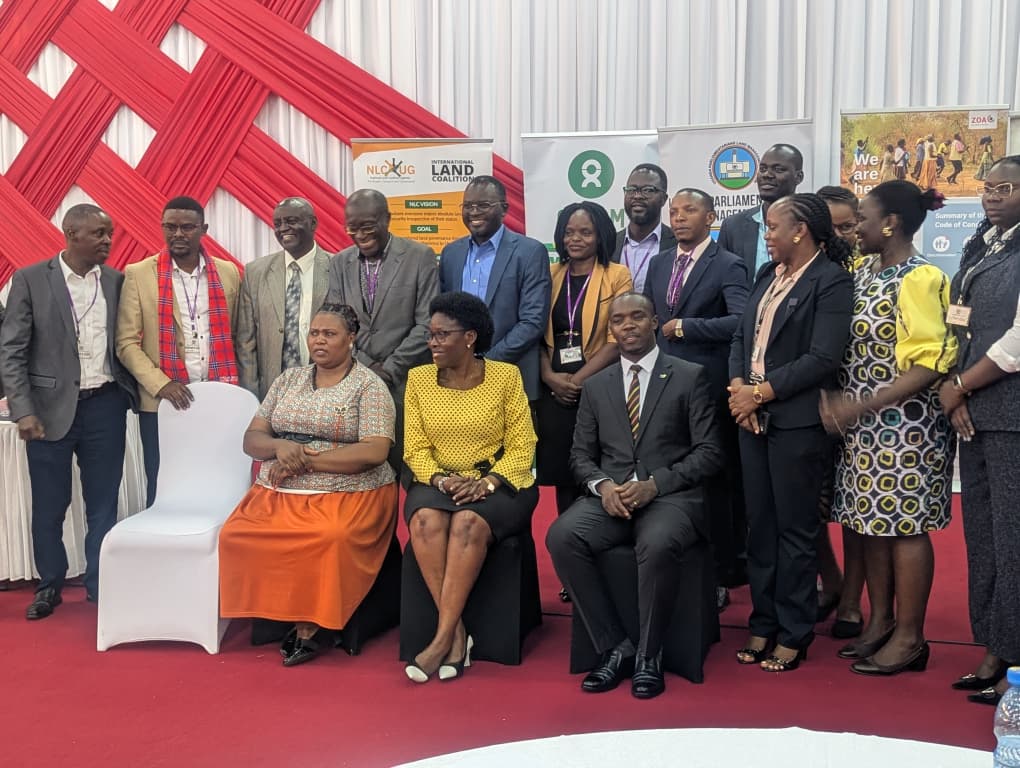
Kampala – The Minister of Lands, Housing and Urban Development, Judith Nabakooba, has called on Local Council (LC) chairpersons across the country to temporarily suspend the endorsement of land transactions until after the forthcoming LC elections, saying the measure would help curb fraudulent land deals and prevent disputes.
Speaking while opening an orientation programme on land governance for newly elected Members of Parliament at Parliament under the theme, “Strengthening Land Governance for Inclusive Development, Tenure Security and Sustainable Land Use in Uganda,” Nabakooba said the Ministry had received reports that some LC leaders were facilitating questionable land transactions for personal gain ahead of the elections.
She said the election period often creates opportunities for unscrupulous individuals to exploit communities through illegal land sales, especially where local leaders are nearing the end of their terms.
“I appeal to LC chairpersons to refrain from handling land transactions until the elections are over. This will help protect wananchi from fraud and reduce land-related conflicts,” Nabakooba said.
She urged Ugandans to exercise patience during the election period and advised both buyers and sellers to follow the legally established procedures before concluding any land transactions.
The minister encouraged members of the public to verify land ownership through Area Land Committees, sub-county chiefs, town councils and registered advocates to avoid falling victim to fraudsters.
Nabakooba also announced that the Ministry is reviewing the National Land Policy, first adopted in 2013, to address emerging land governance challenges and align it with Uganda’s current development priorities.
She said Parliament would be consulted before the revised policy is submitted to Cabinet for consideration.
Describing land as the backbone of Uganda’s socio-economic development, Nabakooba noted that it supports agriculture, housing, industrialisation, infrastructure development and environmental conservation. However, she said the sector continues to face persistent challenges, including land conflicts, fragmentation, environmental degradation, corruption and limited public awareness of land rights.
To improve access to land services, the minister said the Ministry has established 22 zonal land offices across the country, enabling Ugandans to process land registration and other services closer to their communities instead of travelling to Kampala.
She added that land searches have been digitised, allowing the public to verify land records online using mobile phones and other digital platforms.
According to Nabakooba, Uganda has increased the proportion of registered land from 18 percent in 2013 to about 30.12 percent today. However, she acknowledged that a significant amount of customary land remains unregistered, making many communities vulnerable to land grabbing and ownership disputes.
She said the Ministry is implementing the Systematic Land Adjudication and Certification (SLAAC) programme in several districts to strengthen land tenure security and promote formal land registration.
Nabakooba also urged Ugandans to prioritise estate planning and succession arrangements, noting that many land disputes arise after the death of property owners who leave no clear plans for the distribution of their assets.
The Acting Director and Acting Commissioner for Land Administration, Naome Kabanda, described land as the foundation of Uganda’s economic transformation, despite not being explicitly listed among the government’s four priority sectors under the national growth strategy.
She said effective land governance requires transparent institutions, clear legal frameworks and accountable decision-making, warning that weak land administration fuels land grabbing, increases transaction costs and discourages investment.
Kabanda noted that Uganda’s land governance system combines statutory and customary tenure, with customary practices continuing to play a significant role in inheritance and succession matters.
She called on Members of Parliament to support reforms that strengthen land rights, improve agricultural productivity and promote responsible land use.
Adjumani District Woman MP Jesca Ababiku said land remains one of Uganda’s most contested resources, noting that nearly 42 percent of court cases involve land disputes. She urged legislators to champion policies that protect vulnerable communities from land loss.
Mukono District MP Abdallah Kiwanuka expressed concern over delays in resolving land disputes, saying the slow pace of the judicial process has encouraged the emergence of informal dispute resolution mechanisms that often worsen conflicts.
He called for reforms to expedite the hearing of land cases and discourage unauthorized individuals and bodies from handling land disputes outside the formal justice system.
Meanwhile, the Chairperson of Parliament’s Committee on Lands, Housing and Urban Development, Edson Rugumayo, pledged that the committee would work closely with government agencies and stakeholders to strengthen land governance through legislation, oversight and policy reforms.
He said the committee’s performance would be measured by the quality of legislation, reports and policy recommendations it delivers to address Uganda’s growing land governance challenges.